Friday, July 22, 2016

Who is Fethullah Gülen?


"Turkey won't be frightened with this kind of uprising and Turkey cannot be governed from Pennsylvania…”  To whom was Recep Tayyip Erdoğan referring when he said this after the abortive coup in Turkey?  That would be Fethullah Gülen.  Who is this guy, and why does Erdoğan (pronounced er-do-wan) have such enmity for him?  Gülen, 75, is an influential Muslim cleric who has been living in self-imposed exile in Pennsylvania since 1999.  At one time, he was an ally of Erdoğan and helped him and his Justice and Development Party (AKP) come to power in 2002.  He draws on the traditions of Anatolian Sufism, a mystical strain of Islam usually portrayed as being moderate.  In an article written by Rachel Sharon-Krespin for the winter 2009 edition of Middle East Quarterly, she wrote “he presents himself and his movement as the modem-day version of tolerant, liberal Anatolian Sufism and has used the literature of great Sufi thinkers such as Jalal ad-Din Rumi and Yunus Emre, pretending to share their moderate teachings.” Gülen is considered to be one of the world's leading moderate voices of Islam.  Erdoğan and his government consider Gülen to be a terrorist.
   

Gülen fled Turkey in 1999 because of accusations he tried to overthrow Turkey’s secular government.  He was acquitted of all charges in 2008.  During his trial, a video of clips from his sermons to his followers aired on Turkish TV.  In this video, he said the following: 

“You must move in the arteries of the system without anyone noticing your existence, until you reach all the power centers…you must wait until such time as you have gotten all the state power, until you have brought to your side all the constitutional institutions in Turkey.” 

Gülen leads a movement called Hizmet, which literally translated means “the service.”  Hizmet is often portrayed as a peaceful face of Islam, one that advocates interfaith dialog, religious tolerance and the establishment of secular and democratic government in Turkey.  Hizmet has a substantial presence in Turkish society, including the military, police, judiciary and the media.  It runs a network of schools (approximately 1,000 across 150 countries, including almost 100 in the United States) that are praised for their academic rigor and their commitment to spreading Turkish language and culture.  Critics [and there are many] believe these schools serve the same function as the madrassas do in Pakistan.  They allege these schools indoctrinate children in the tenets of radical Islam and prepare adolescents for the lslamization of the world.   Some governments [especially Turkey’s] see Hizmet as a threat.  The Turkish government sees Gülen’s followers as a threat to use their government positions to undermine them and take power.  British lawyer Robert Amsterdam maintains a blog where he documents all things related to Fethullah Gülen [http://robertamsterdam.com/].  As one reads his blogs, one finds that perhaps Fethullah Gülen is not who he presents himself to the public [Full disclosure - Robert Amsterdam is on retainer for Erdoğan]. 


Hizmet and the AKP were once allies. Both groups had a common enemy, the Kemalist establishment as represented in the military and the government bureaucracy.  But since Erdoğan’s ascension to power they have grown apart.  The two organizations broke into open conflict in 2013, when Erdoğan and other government officials [including Erdoğan’s son Bilal] were targeted in corruption scandals.  One scandal was a “gold for oil” deal between Turkey and Iran that was created for Iran to evade American sanctions against Iran.  This scandal also involved bribery and money laundering.  Erdoğan’s phone had been tapped, and in one recording he is heard to be telling his son to get rid of huge sums of cash stashed at his home.  This and other embarrassing recordings were shared on YouTube.
 
Another source of conflict between Gülen and Erdoğan is education.  In November 2013 Erdoğan’s government announced that it planned to shut down Gülen’s network of schools in 2015.   Because of Gülen’s schools Turkey [and Gülen himself] enjoy prestige and influence in Central Asia, Africa, and elsewhere.  In a January 2014 Op-Ed piece in Foreign Policy Journal, Bayram Balci [from the Carnegie Middle East Program] described Hizmet and the Gülen schools as “a wonderful soft power instrument for Ankara.”  But now Turkey is not big enough for both Gülen and Erdoğan.  Erdoğan claimed his problem with scandals was a Gülenist retaliation for his intention to shut down the schools.  He also claimed the police and judiciary were riddled with members of Hizmet.  In May 2016 Erdoğan officially designated Hizmet as a terrorist group.  Prior to this designation, the Turkish government seized or closed down numerous assets related to Gülen, including media firms and a bank.  Erdoğan accused Gülen of conspiring to overthrow his government by building a network of supporters in the media, judiciary, police and education.  Which brings us to the July 16th coup attempt. 

The coup failed, but it made for some great television.  I first heard about it at work and started to follow the Sky News live feed on YouTube.  Before I went home for the day I saw Erdoğan giving an interview to a private TV station.  That told me the rebels didn’t have him.  How do you take power without arresting the guy from whom you’re seizing power?  By the time I got home I wondered aloud whether the coup would turn out like the August 1991 coup against Mikhail Gorbachev.  It wasn’t long before I had my answer.  Erdoğan called the failed coup “a gift from Allah” and it didn’t take long for the government to start rounding up suspects and purging the system.  Erdoğan needed an excuse to move against enemies real and imagined, and the failed coup gave him one. 
 
The size and scope of the purge [see RFE/RL’s graphic below] tells me the AKP had their “lists” of people to detain, sack, fire [pick your favorite verb], and that perhaps, just perhaps, this coup was staged.  I’m reminded of two incidents in history where a ruler either “left the scene” or acted like he was loosening his iron-fisted grip on society, only to change their minds and tighten their grip on society. 

Ivan IV [“the Terrible”] - When Ivan IV became Tsar, he was only three years old.  His mother Elena acted as regent until she too died when Ivan was eight.  It wasn’t until he was sixteen that he was actually crowned a “Tsar of All the Russias.”  In the interim, he had to reign while the nobility, the boyars, exercised the real power.  The boyars did not treat young Ivan very well.  He remembered this maltreatment.  Seventeen years later [in December 1564], Ivan had enough of the boyars.  He packed all his stuff, abdicated, and left.  Ivan wrote two letters – one in which he accused the boyars of treason, the other which absolved the rest of the population from the treachery of the boyars.  The boyars tried ruling in Ivan’s absence but couldn’t.  Muscovites sent an envoy to Ivan [who was in Aleksandrova Sloboda, about 120 miles northeast of Moscow], begging him to return.  Ivan agreed to return under the condition that he be allowed to deal with the boyars as he wished without interference from the Church or the boyar council.  Ivan got what he wanted.  On his return, Ivan divided his realm into two parts – the Oprichnina, which was designated as crown land under his immediate control, and the Zemschina, which he left to boyars and bureaucrats he trusted to administer.  Ivan also created the Oprichniki.  They were Ivan’s secret police.  These are the guys who did Ivan’s dirty work – mass repression, executions of Ivan’s enemies, and confiscation of boyar lands.  This was the beginning of the absolute monarchy in Russia. 


Mao – The Hundred Flowers Movement was an idea Mao had in the 1950s.  The idea, stemming from a quote of his to “let a hundred flowers bloom,” was to allow people to openly discuss the country’s problems.  Mao welcomed “constructive criticism.”  Those who were dumb enough to take Mao at his word actually made criticisms.  The party began to receive letters.  Wall posters that criticized the government appeared everywhere.  Students and teachers, writers and lawyers began to criticize party leaders.  They pointed out the hypocrisy of corrupt party leaders who lived well while the great unwashed suffered a low standard of living.  When this happened, Mao reversed course and began the Anti-Rightist Campaign [1957].  By the hundreds of thousands people were arrested.  Many critics lost their jobs and were forced to do manual labor in the country.  Other critics were sent to prison.  They were the lucky ones as others were executed.  Mao later said of the Hundred Flowers Movement that he had “enticed the snakes out of their lairs.”  When the Great Leap Forward [1958-61] started the following year to try and turn China from an agrarian economy into an industrialized and collectivized, socialist society, nobody would dare tell the emperor he had no clothes as millions died and the economy regressed. 


I don’t think it is mere coincidence that so many people are being fired as a result of the failed coup.  These mass dismissals just happen to come in those fields where Erdoğan claims the Gülen movement dominates Turkish society.  In addition to demanding Gülen’s extradition from the United States, Erdoğan is also asking other countries to follow Turkey’s lead regarding the Gülen schools.  According to RFE/RL, Uzbekistan closed their schools in the early 2000s, Turkmenistan in the early 2010s, and Tajikistan last year.  Russia has put their Gülen schools under state control.  And now, Turkish lawmakers declared a three-month state of emergency.  Erdoğan asked for sweeping new powers to expand his crackdown on all things Gülen.  Before the coup attempt, Erdoğan had been accused of autocratic conduct, but now he can extend detention time for “suspects” and issue decrees without parliamentary approval.  According to Al Jazeera, curfews could be enforced, and gatherings and protests could be banned without official consent.  Media could also be restricted, while security personnel could conduct searches of persons, vehicles or properties and confiscate potential evidence.  If this sounds familiar, read Germany’s Enabling Act of 1933.  It looks like the mask has been ripped away and the real dictatorship has begun.


Friday, June 24, 2016

UKIP and Brexit

What happens when a political party’s single most important goal is actually achieved?  I ask because of what happened in the UK this week.  The UK Independence Party was founded in 1991.  It’s a hard Eurosceptic party.  Their core issue is to get the UK out of the European Union.  Well, the Coyote caught the Roadrunner.  The British electorate voted to leave the EU.  Now what?  UKIP has one Member of Parliament [MP], and it isn’t Nigel Farage.  While sitting in a Frankfurt hotel I heard him on the BBC, saying that what Britain needs now is a “Brexit government.”  How’s that going to work?  He’s not going to lead it.  The ironic thing about UKIP is they have more Members of the European Parliament [MEPs] [24 so far] than they do MPs in their own British Parliament [1 – Douglas Carswell].  When the UK leaves the EU within the next two years, so too will the UKIP MEPs.  Now that their single issue has come to pass, how will the UKIP adapt post-Brexit?  Other than the aforementioned issue, I have no idea what that party stands for.   

This got me thinking about our own Republican Party.  During the good old days of the Cold War, when we knew who our enemy was, the Republicans practically owned the national security issue.  They portrayed themselves as the toughest to fight the Soviet “evil empire.”  Since the end of World War II, three Republican tickets [Eisenhower/Nixon, Nixon/Agnew, and Reagan/Bush] were elected and re-elected.  The elder Bush even won an election in his own right after Reagan was forced out by term limits.  Then like a bolt from the blue, the dominoes we thought would fall in Southeast Asia after Vietnam’s defeat fell in Eastern Europe instead.  When the Berlin Wall came down in October 1989, it was the beginning of the end for the Communists.  Even the Soviet Union disappeared in December 1991.  The enemy was gone, and the Soviet specter was replaced by the phrase “it’s the economy, stupid!”  With that backdrop, Bush didn’t stand a chance against Bill Clinton in 1992.  Since George Bush’s election, three presidents were elected to serve for eight years each - two of them were Democrats.  

On September 11, 2001, the Twin Towers came down.  As I sat in a Godfather’s Pizza place in Sacramento that day, it occurred to me that because of what happened on that day, the Republicans had a new lease on life – the war on terror.  In my mind it was the new Cold War.  Or so I thought.  Fifteen years have passed since that awful day, and for some memories have faded.  So too has the Republican Party.  For decades the Republicans have been portrayed as the “party of the rich”, never mind that more rich people seem to support Democrats these days.  In the fifteen years since 9/11, the war on terror has worked for Republicans a grand total of one time, in 2004.  What happened since then was a war in Iraq that was badly bungled.  There was the Afghanistan fight that has never ended.  Since the end of the Cold War the Republicans have become an opposition party rather than a party that governs.  When Democrats win the White House and Congress, they tend to go hog wild with the things they want to do.  They can’t help it - it’s what they do.  The United States being for the most part a center-right country, there is the inevitable backlash and they elect Republicans as a check on Democratic power.  If we have a government that “does nothing” it’s because the American electorate want it that way.  That electoral success just doesn’t translate to the Presidential level.

Friday, June 17, 2016

Banned!

Congratulations, Russia!  Your past has finally caught up with you.  For the first time ever, an entire class of athletes from a specific country have been banned from the Olympics because of cheating.  The International Association of Athletics Federations [IAAF] banned Russia’s entire track and field team from competing in the 2016 Rio Summer Olympics.  The World Anti-Doping Agency [WADA] established an Independent Commission to conduct an inquiry into the allegations made by the German broadcaster ARD.  The Independent Commission verified the broadcast’s claims, the report of which detailed a culture of cheating in Russian athletics supported by the Russian state.  After the Independent Commission published its report last November, the IAAF banned Russia’s track and field athletes from international competitions.  They told the Russians to get their act together or face the consequence, that being the IAAF would make the ban stick and apply it to this year’s Olympics.  Perhaps Russia thought the IAAF was bluffing.

On June 15th, WADA issued a follow-up report, and apparently the Russians didn’t get the message.  Maybe they think that because they are a “great power” the rules that apply to everyone else don’t apply to them.  Some of the findings include [but are not limited to] the following:  

--Doping Control Officers [DCOs] faced intimidation and threats of expulsion from Russian security services;  
--Packages containing samples from tested athletes were tampered with by Russian customs officials; --Security staff created significant delays for DCOs in entering venues and consistently monitored once inside (Race Walking in February and Wrestling in May);  
--Schedules not released until the day prior to or day of competition;  
--Challenging to find events because at times only a region is provided for the location, not a specific venue or city;  
--736 drug tests of Russian athletes were canceled for various reasons  
  • 669 due to sample collection authority lack of capacity  
  • 2 due to athletes "retiring"  
  • 25 as a result in change of whereabouts  
  • 40 recorded due to “other reasons”  
  • 22 requests to test at competitions declined  


--National Championships for Olympic Sports including Olympic qualifiers held in cities with restricted access due to ongoing civil conflicts resulting in service providers declining test requests;  
--Military cities often used as location of whereabouts [athletes know that special permission is needed to gain access].   

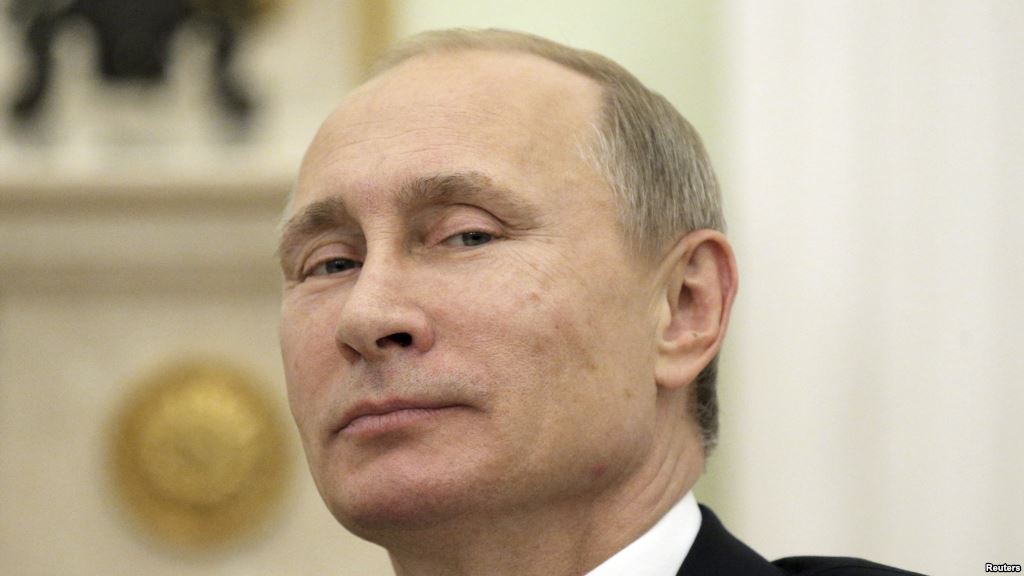
Vladimir Putin complains this is “mass punishment” and that banning all Russian track and field athletes is unfair.  Putin of all people should be well aware of the concept of “mass punishment.”  He served a regime that: 1) deported thousands of Lithuanian, Estonian and Latvian intellectuals to Siberia 75 years ago this week [most didn’t return]; 2) deported thousands of Crimean Tatars to Siberia in 1944 for alleged collaboration with the Nazis; 3) executed thousands of Polish military officers and intellectuals in 1940 [Katyn Forest] for the crime of being Polish and for having independent thought; and 4) unleashed the Holodomor on Ukraine, an act of genocide that starved millions of Ukrainians to death.  Cries of mass punishment from Vladimir Putin ring hollow.  

The Russians are an interesting bunch.  They’re not satisfied with breaking the rules to get a leg up on their competition in track and field.  Russian “soccer fans” [not unlike English football hooligans before them] are in France for Euro 2016, seemingly for the sole purpose of beating the shit out of fans from other countries just because they can.  Such is their hooliganism that even FIFA is mad at them.  Their behavior is such that FIFA has threatened to disqualify Russia from the remainder of Euro 2016.  This point might be moot in a few days because the team will probably be going home early because of their own ineptitude.  To incur the wrath of FIFA, an organization that has its own significant issues with corruption, takes a special talent.  If FIFA really wants to get Russia’s attention, they could take the 2018 FIFA World Cup away from Russia.  I don’t see that happening, but I can always dream.  

The Russians treat sports the same way they do international affairs.  Because they used to be a great power, they think they have special status and can get away with anything.  But now, not only do they endure political and economic sanction for their bad behavior in Ukraine, they also face sanction from the sports world.  This won’t change as along as Vladimir Putin breathes.  
   

Thursday, May 26, 2016

The Collective Putin

A long time ago in another lifetime, I was a History major in college.  My area of concentration was Russia & the Soviet Union.  This was during the Cold War and the Soviet Union was by far the most interesting places to study.  I kept my eye on this area because of what I did for a living [I was an Air Force intelligence officer].  It was fun to be an amateur Kremlinologist.  I was going to write a Master’s thesis on the effects of nationalism on the Soviet Union and whether it would break-up that superpower.  But a funny thing happened on the way to writing the thesis – the break-up actually happened, and for the very reason I suspected.  So after the collapse of the Soviet Union my focus on such things wasn’t as sharp as they had been prior to the August 1991 coup. But Russia’s decision to annex the Crimea in 2014 jump-started my desire to deep-dive back into all things Russian.   

While casting about for sources to get me back up to speed on Russian events, I found Radio Free Europe/Radio Liberty.  Given that RFE/RL was a child of the Cold War, imagine my surprise that such a thing still existed 25 years after the Cold War ended.  Not only does it still exist, it is flourishing.  RFE/RL is my go-to source for all things Russian.  In particular is their Russian analyst, Brian Whitmore.  He hosts a weekly podcast called The Power Vertical, which provides keen insight to what’s happening inside Russia.  During one of his podcasts, Whitmore referred to “the Collective Putin” and has continued to do so ever since.  What does he mean by “the Collective Putin”?  He doesn’t name many names, but he has mentioned a few on the air to give me a clue where to look for the rest of the names.  It is those people with whom Vladimir Putin has surrounded himself to govern Russia.  It isn’t just one group of people upon whom Vladimir Putin use – there are several circles of people, the membership of which sometimes overlap.  Having scoured many an online publication, this is the best list of names I can compile.  These groups of people have Vladimir Putin in common.  They sometimes overlap, but they don’t meet together.  Putin is one who stands above the fray and is the ultimate arbiter of issues between these groups.  

My first glimpse into the Collective Putin came in March 2014, when the US slapped sanctions against individuals within the Russian ruling elite.  That was a start, but what are the backgrounds of these people?  One such group is known as the Soliviki.  The folks at Global Security say the term siloviki is taken from silovye struktury, loosely translated from Russian as “force structures”.  So siloviki is a blanket term used to describe “men of force”, and these particular men of force have backgrounds in intelligence, state-security, and military with ties to the KGB, the Federal Security Service (FSB), the Foreign Intelligence Service (SVR), the Main Intelligence Directorate (GRU), or even the armed forces.  As former-KGB, Vladimir Putin is a silovik.  The siloviki are the kind of people with whom Putin is most comfortable.  They offer Putin a direct defense against political threats.  Siloviki are like Marines – Marines think of themselves as “once a Marine, always a Marine.”  So too it is with the siloviki – once a silovik, always a silovik.  Vladimir Putin is quoted as saying “there is no such thing as a former Chekist.”  When the Soviet Union was on the cusp of collapse, Putin transitioned from KBG to politics in the civilian world, and wherever he’s gone in his career, the siloviki have gone with him.  Brian Whitmore refers to the siloviki has Putin’s “sword and shield.”   

Putin has managed to put his fellow siloviki in positions of government. He has also placed them in positions of authority in industries [most especially the energy sector and weapons manufacturing] and media that Putin uses as tools to cajole or coerce other countries to help Russia’s interests.  Putin’s Russia is a Chekist corporate state.  But this Chekist corporate state has no interest in Communist ideology.  Their interest is money and power.  Below is just a sample of those who have been along for the ride with Putin:  

                                                      Table 1:  Putin’s Siloviki

Silovik
Connection to Putin
Positions Held
Igor Sechin
GRU
-        Putin’s Chief of Staff, 1994-96
-        Putin’s deputy, Presidential Property Management Dept
-        Deputy Chief of Putin’s presidential Admin, 1999-2008
-        CEO of Rosneft Oil Company, 2004-present
Sergei Ivanov
Leningrad KGB
-        Deputy FSB director overseeing analysis, forecasting, and strategic planning, 1998-99
-        Secretary, Security Council, 1999-2001
-        Defense Minister, 2001-07
-        Deputy Prime Minister, 2005-07
-        First Deputy Prime Minister, 2007-08
-        Chairman, United Aircraft Corporation (OAK), 2006-present
Nikolai Patrushev
Leningrad KGB
-        FSB Director, 1999-2008
-        Secretary, Security Council, 2008-present
Alexander Bortnikov
Leningrad KGB
-        FSB Director, 2008-present
-        FSB Deputy Director, 2004-08
-        Chief, St. Petersburg FBS, 2003-04
Nikolay Tokarev
Dresden KGB
-        President of the Russian oil company Zarubezhneft, 2000-07
-        President of the Russian pipeline company Transneft, 2007-present
Sergei Naryshkin
Leningrad KGB
-        Chairman of the Board of Directors, Channel One, 2006-present
-        Deputy Prime Minister for external economic activity, 2007-08
-        Chairman of the State Duma, 2011-present
Viktor Ivanov
Leningrad KGB
-        Director General of Almaz-Antey [Anti-aircraft]
-        Head of the Internal Security Department of FSB
-        Director, Federal Drug Control Service [FSKN], 2008-16
-        Deputy Head of the Presidential Staff for personnel, 2000-present
Viktor Cherkesov
Leningrad KGB/FSB
-        Director St. Petersburg FSB, 1992-98
-        First Deputy Director of FSB, 1998-2000
-        Putin's envoy to the Northwest Federal District, 2000-03
-        Director, Federal Drug Control Service [FSKN], 2004-08
-        Head of the Federal Service for Exports of Arms, Military and Special Equipment, 2008-present
Aleksandr Grigoryev
Leningrad KGB
-        Deputy Director of FSB, 1998-2001
-        Director of the Russian State Reserves Agency, 2001-04
-        Director of the Federal State Reserves Agency, 2004-08 [his death]
Sergei Chemezov
Dresden KGB
-        CEO of Rostec defense and industrial group - “Putin’s arms trader”
Andrei Belyaninov
Dresden KGB
-        Director General of Rosoboronexport, 2000-04
-        Director, Federal Defense Order Service, 2004-06
-        Director, Federal Customs Service [FTS], 2006-16


Vladimir Putin was born in Leningrad [now St. Petersburg] in 1952.  After graduating from the Leningrad State University, Putin joined the KGB.  He worked in counterintelligence before transferring to another directorate to monitor foreigners and the myriad consular officials in Leningrad.  After serving the KGB in Leningrad for 10 years, Putin moved to Dresden in East Germany.  After East Germany dissolved and became part of the Federal Republic of Germany, Putin went back to Leningrad.   Beginning in 1991, he started to work for Anatoly Sobchak, the city’s mayor.  It was during his time in the Leningrad/St. Petersburg government that Putin chaired what was the Director of the Committee for Foreign Liaison [KVS].  It was here that he immediately began to gather around himself the core group of people who would work with him throughout the 1990s and into his presidency.  Some of those people were fellow siloviki.  Others came from Komsomol, legal and business circles.   

Deputy Mayor of St. Petersburg
Between 1991-95, Vladimir Putin served first as a deputy mayor, then first deputy mayor [first among equals] of St. Petersburg under Mayor Anatoly Sobchak.  In this position Putin was responsible for oversight of all law enforcement, the Administrative Directorate of the city, the Hotel Directorate, the Justice Department, the Registration Chamber, and the Public Relations Directorate.  At the beginning of his tenure as deputy mayor, Putin was also still in the KGB’s active reserves until at least August 1991.  As a former KGB operative in East Germany, with dealings in East‑West German economic relations, Putin had more experience than most Russians in foreign economic relations.  

With this experience he was able to secure for himself the post of Director of the Committee for Foreign Liaison [KVS].  Here he was responsible for encouraging, regulating, and licensing foreign investment in St. Petersburg and Russian investment through St. Petersburg abroad.  He was uniquely positioned to regulate the movement of money, goods, and services into and out of Russia’s largest trading city.  Businesses that wanted to be established legally in St. Petersburg had to be licensed and registered by Putin’s KVS.  Putin dealt with literally thousands of foreign and native investors, from Coca‑Cola to organized crime bosses. 

When Putin went to work for Sobchak, he immediately began to gather around himself the core group of people who would work with him throughout the 1990s and into his presidency.  Here are just some of those people:  

                                                 Table 2:  Putin’s St. Petersburg Cadre


Function in St. Petersburg
Position(s) after St. Petersburg
Igor Sechin
-        Putin’s Chief of Staff, 1991-96
See Table 1, Putin’s Siloviki
Viktor Zubkov
-        Deputy Chairman of the External Relations Committee, 1992-93
-        Department of the State Tax Inspection, 1993-98
-        Prime Minister, 2007-08
-        First Deputy Prime Minister, 2008-12
-        Chairman, Gazprom, 2008-present
Dmitri Medvedev
-        Adviser to Mayor Anatoly Sobchak
-        Legal Counsel to KVS
-        Friend of Vladimir
-        Chairman, Gazprom, 2002-08
-        Presidential chief of staff, 2003-05
-        First Deputy Prime Minister, 2005-08
-        President of Russia, 2008-12
-        Prime Minister, 2012-present
Viktor Ivanov
-        Chief of the Administrative Staff of the Mayor’s office
See Table 1, Putin’s Siloviki
Aleksei Kudrin
-        Vice Chairman of the Committee for Economic Reform
-        Deputy Mayor, 1993-96
-        Minister of Finance, 2000-11
Sergei Naryshkin
-        Committee for Economy and Finance, 1992-95
See Table 1, Putin’s Siloviki
Dmitriy Kozak
-        Deputy head, St. Petersburg City Hall’s Legal Department, 1990-91
-      Deputy Presidential chief of staff, 2000-04
-      Putin’s envoy to the Caucasus & Southern European Russia, 2004-07
-      Deputy Prime Minister for 2014 Sochi Olympics
Alexei Miller
-        Putin’s deputy at KVS, 1991-96
-        Deputy Chairman, Gazprom, 2002-present
Nikolai Shamalov
-        KVS
-        Co-owner of Bank Rossiya
Vladimir Churov
-        KVS
-        Chairman, Central Election Commission, 2007-16
Vladimir Kozhin
-        Director General of the St. Petersburg Association of Joint Ventures
-        Head of the Presidential Property Management Department, 2000-present
-        Assistant to the President for military and technical cooperation


During Putin’s tenure as First Deputy Mayor in St. Petersburg, he made a lot of “friends,” some of them “legitimate businessmen,” some of them not so “legitimate.”  Putin owned a dacha outside St. Petersburg.  Seven of his friends built dachas near his and together they formed a gated community called the Ozero Dacha Consumer Cooperative.  

Ozero Dacha Consumer Cooperative
All the cooperative members have assumed top positions in government and industry and have made lots of money.  A gated community of dachas on the banks of Lake Komsomolskoye, on the Karelian Isthmus near St. Petersburg.  On November 10, 1996 the eight members of this gated community [including Vladimir Putin], formed a housing cooperative.  Included in this cooperative is a bank account.  All members of this cooperative are entitled by Russian law to deposit or withdraw funds for their own personal use.  It’s a “share the wealth” bank account.  Karen Dawisha, author of Putin’s Kleptocracy:  Who Owns Russia? concluded this bank account is just one of many ways Vladimir Putin can receive money from others directly.  

Leader:  Vladimir Smirnov - Appointed by Putin to head of Tekhsnabeksport, one of the world’s largest suppliers of nuclear goods and services to foreign governments, including Iran.  

Vladimir Yakunin - had been first secretary at the Soviet mission to the UN, a post normally reserved for KGB officers.  Became the federal representative in the Northwest Region for Presidential Property Management Department in Moscow under Putin.  He moved on to become deputy minister of transportation in charge of the country’s seaports in 2000 and then in 2005 became head of Russian Railways.  He was relieved of his duties at Russian Railways in early 2016.  

Yuri Kovalchuk - described as “essentially the personal banker for many senior government officials of the Russian Federation, including President Putin.  He’s the largest shareholder of Bank Rossiya, and has been its chairman since 2004.  

Viktor Myachin – Former Director-General of Bank Rossiya (until 2004).  Since 2004 CEO of the investment company "Abros" that is a subsidiary of Rossiya Bank. This investment company owns 51% of the Согаз, a big insurance company in Russia.  

Sergei Fursenko - Head of Lentransgaz, which then became Gazprom Transgaz Sankt‑Peterburg, one of Gazprom’s largest subsidiaries.  

Andrei Fursenko - Appointed deputy minister, then first deputy minister, then acting minister of industry, science, and technology; after 2004 he became minister of education and science.  

Friends of Vladimir
Arkady and Boris Rotenberg – These two have known Putin since childhood.  They share a love of judo and hockey with Putin.  They own the SGM Group, the largest construction company for gas pipelines and electrical power supply lines in Russia.  The US Treasury says the Rotenberg brothers have provided "support to Putin's pet projects" by receiving and executing approximately $7 billion of contracts for the Sochi Olympic Games and state-controlled energy giant Gazprom.  

Gennady Timchenko – a longtime Friend of Vladimir.  He founded the Guvnor, one of the world's largest independent commodity trading companies involved in the oil and energy markets.  He sold his stake in Guvnor the day before the US slapped him with sanctions related to the annexation of Crimea.  He owns the Volga Group, an investment strategy company with stakes in energy and infrastructure.  The Volga Group controls the Stroytransgaz Group [STG], an engineering construction company that was originally a subsidiary of Gazprom. The Volga Group also owns 23% of Novatek, Russia’s largest independent natural gas producer.  

Others in Putin’s Orbit
Vyacheslav Volodin -  First deputy chief of the Kremlin staff since late 2011, Vyacheslav Volodin is one of President Putin's closest advisers. He is thought to have played a key role first in Russia's decision to move into Crimea, before overseeing the annexed Ukrainian region's political integration as part of Russia.  

Dmitri Kiselyov - A controversial state TV anchor who recently became head of the state news agency Russia Today. He is well-known for his anti-Western and homophobic diatribes, as well as his extremely hostile attitude to the protests in Kiev that led to the ousting of President Viktor Yanukovych.  

Vladislav Surkov - Currently a presidential aide, he is regarded as the mastermind of Mr. Putin's successive election victories through his controversial strategy of "managed democracy". He became known as the "grey cardinal" for his behind-the-scenes influence particularly in Putin's first presidential term of office from 2000-2008.  

Dmitri Rogozin - An outspoken deputy prime minister and former Russian ambassador to NATO in Brussels. He shrugged off the sanctions with a tweet that said: "All these sanctions aren't worth a grain of sand of the Crimean land that returned to Russia."  Deputy Prime Minister, in charge of defense and space industry.  

Viktor Zolotov - commander-in-chief of the new National Guard.  He was Putin’s bodyguard for 13 years.  Russian security expert Mark Galeotti refers to Zolotov as “one of President Putin’s most loyal and muscular henchmen”. The National Guard consists of riot police and paramilitary security troops that used to belong to the Ministry of Internal Affairs.  Zolotov reports directly to Putin.  Galeotti makes an interesting and thought-provoking observation:  

In my opinion, it is crucially important that all his life this man was a bodyguard. This profession produces a specific psychology. Military personnel, security officers, and police officers are all indoctrinated with the belief that their task is to protect the people and the state. A bodyguard, on the other hand, is trained to see his job as not to save Russia or the public, but a specific “protected person.”  

The “protected person” is Vladimir Putin.  

When the Soviet Union was still around, Kremlinologists had it relatively easy compared to today.  Back then there was one group of people to watch – the Communist Party of the Soviet Union.  Kremlinologists scrutinized positions on the reviewing stand on Lenin’s Tomb, who was sitting next to whom, who got published in Pravda, who gave the important speeches, or who headed the funeral committee when a General Secretary died.  With Putin, he’s got several power bases, the most powerful of which is the siloviki, but even they have internal squabbles.  He also has loyalty from oligarchs, business circles, and people like Ramzan Kadyrov and Viktor Zolotov.  He brought these people [except Kadyrov, Timchenko and the Rotenbergs] to Moscow, and they owe their positions to him.  I think it is these people that Brian Whitmore had in mind when he coined the phrase “the Collective Putin”.  

Did I miss anybody, Oleg?