Thursday, May 26, 2016

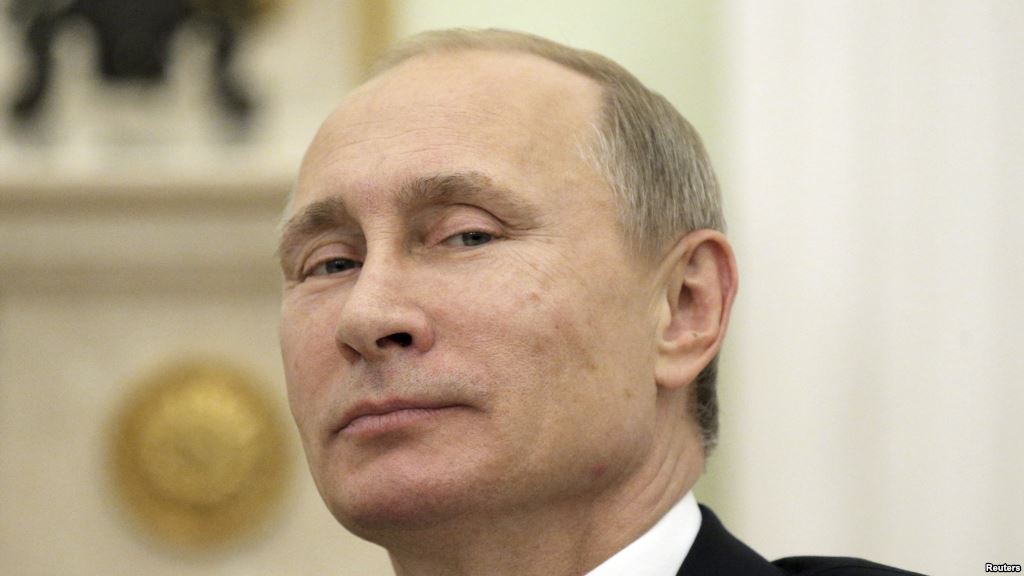
The Collective Putin

A long time ago in another lifetime, I was a History major in college.  My area of concentration was Russia & the Soviet Union.  This was during the Cold War and the Soviet Union was by far the most interesting places to study.  I kept my eye on this area because of what I did for a living [I was an Air Force intelligence officer].  It was fun to be an amateur Kremlinologist.  I was going to write a Master’s thesis on the effects of nationalism on the Soviet Union and whether it would break-up that superpower.  But a funny thing happened on the way to writing the thesis – the break-up actually happened, and for the very reason I suspected.  So after the collapse of the Soviet Union my focus on such things wasn’t as sharp as they had been prior to the August 1991 coup. But Russia’s decision to annex the Crimea in 2014 jump-started my desire to deep-dive back into all things Russian.   

While casting about for sources to get me back up to speed on Russian events, I found Radio Free Europe/Radio Liberty.  Given that RFE/RL was a child of the Cold War, imagine my surprise that such a thing still existed 25 years after the Cold War ended.  Not only does it still exist, it is flourishing.  RFE/RL is my go-to source for all things Russian.  In particular is their Russian analyst, Brian Whitmore.  He hosts a weekly podcast called The Power Vertical, which provides keen insight to what’s happening inside Russia.  During one of his podcasts, Whitmore referred to “the Collective Putin” and has continued to do so ever since.  What does he mean by “the Collective Putin”?  He doesn’t name many names, but he has mentioned a few on the air to give me a clue where to look for the rest of the names.  It is those people with whom Vladimir Putin has surrounded himself to govern Russia.  It isn’t just one group of people upon whom Vladimir Putin use – there are several circles of people, the membership of which sometimes overlap.  Having scoured many an online publication, this is the best list of names I can compile.  These groups of people have Vladimir Putin in common.  They sometimes overlap, but they don’t meet together.  Putin is one who stands above the fray and is the ultimate arbiter of issues between these groups.  

My first glimpse into the Collective Putin came in March 2014, when the US slapped sanctions against individuals within the Russian ruling elite.  That was a start, but what are the backgrounds of these people?  One such group is known as the Soliviki.  The folks at Global Security say the term siloviki is taken from silovye struktury, loosely translated from Russian as “force structures”.  So siloviki is a blanket term used to describe “men of force”, and these particular men of force have backgrounds in intelligence, state-security, and military with ties to the KGB, the Federal Security Service (FSB), the Foreign Intelligence Service (SVR), the Main Intelligence Directorate (GRU), or even the armed forces.  As former-KGB, Vladimir Putin is a silovik.  The siloviki are the kind of people with whom Putin is most comfortable.  They offer Putin a direct defense against political threats.  Siloviki are like Marines – Marines think of themselves as “once a Marine, always a Marine.”  So too it is with the siloviki – once a silovik, always a silovik.  Vladimir Putin is quoted as saying “there is no such thing as a former Chekist.”  When the Soviet Union was on the cusp of collapse, Putin transitioned from KBG to politics in the civilian world, and wherever he’s gone in his career, the siloviki have gone with him.  Brian Whitmore refers to the siloviki has Putin’s “sword and shield.”   

Putin has managed to put his fellow siloviki in positions of government. He has also placed them in positions of authority in industries [most especially the energy sector and weapons manufacturing] and media that Putin uses as tools to cajole or coerce other countries to help Russia’s interests.  Putin’s Russia is a Chekist corporate state.  But this Chekist corporate state has no interest in Communist ideology.  Their interest is money and power.  Below is just a sample of those who have been along for the ride with Putin:  

                                                      Table 1:  Putin’s Siloviki

Silovik
Connection to Putin
Positions Held
Igor Sechin
GRU
-        Putin’s Chief of Staff, 1994-96
-        Putin’s deputy, Presidential Property Management Dept
-        Deputy Chief of Putin’s presidential Admin, 1999-2008
-        CEO of Rosneft Oil Company, 2004-present
Sergei Ivanov
Leningrad KGB
-        Deputy FSB director overseeing analysis, forecasting, and strategic planning, 1998-99
-        Secretary, Security Council, 1999-2001
-        Defense Minister, 2001-07
-        Deputy Prime Minister, 2005-07
-        First Deputy Prime Minister, 2007-08
-        Chairman, United Aircraft Corporation (OAK), 2006-present
Nikolai Patrushev
Leningrad KGB
-        FSB Director, 1999-2008
-        Secretary, Security Council, 2008-present
Alexander Bortnikov
Leningrad KGB
-        FSB Director, 2008-present
-        FSB Deputy Director, 2004-08
-        Chief, St. Petersburg FBS, 2003-04
Nikolay Tokarev
Dresden KGB
-        President of the Russian oil company Zarubezhneft, 2000-07
-        President of the Russian pipeline company Transneft, 2007-present
Sergei Naryshkin
Leningrad KGB
-        Chairman of the Board of Directors, Channel One, 2006-present
-        Deputy Prime Minister for external economic activity, 2007-08
-        Chairman of the State Duma, 2011-present
Viktor Ivanov
Leningrad KGB
-        Director General of Almaz-Antey [Anti-aircraft]
-        Head of the Internal Security Department of FSB
-        Director, Federal Drug Control Service [FSKN], 2008-16
-        Deputy Head of the Presidential Staff for personnel, 2000-present
Viktor Cherkesov
Leningrad KGB/FSB
-        Director St. Petersburg FSB, 1992-98
-        First Deputy Director of FSB, 1998-2000
-        Putin's envoy to the Northwest Federal District, 2000-03
-        Director, Federal Drug Control Service [FSKN], 2004-08
-        Head of the Federal Service for Exports of Arms, Military and Special Equipment, 2008-present
Aleksandr Grigoryev
Leningrad KGB
-        Deputy Director of FSB, 1998-2001
-        Director of the Russian State Reserves Agency, 2001-04
-        Director of the Federal State Reserves Agency, 2004-08 [his death]
Sergei Chemezov
Dresden KGB
-        CEO of Rostec defense and industrial group - “Putin’s arms trader”
Andrei Belyaninov
Dresden KGB
-        Director General of Rosoboronexport, 2000-04
-        Director, Federal Defense Order Service, 2004-06
-        Director, Federal Customs Service [FTS], 2006-16


Vladimir Putin was born in Leningrad [now St. Petersburg] in 1952.  After graduating from the Leningrad State University, Putin joined the KGB.  He worked in counterintelligence before transferring to another directorate to monitor foreigners and the myriad consular officials in Leningrad.  After serving the KGB in Leningrad for 10 years, Putin moved to Dresden in East Germany.  After East Germany dissolved and became part of the Federal Republic of Germany, Putin went back to Leningrad.   Beginning in 1991, he started to work for Anatoly Sobchak, the city’s mayor.  It was during his time in the Leningrad/St. Petersburg government that Putin chaired what was the Director of the Committee for Foreign Liaison [KVS].  It was here that he immediately began to gather around himself the core group of people who would work with him throughout the 1990s and into his presidency.  Some of those people were fellow siloviki.  Others came from Komsomol, legal and business circles.   

Deputy Mayor of St. Petersburg
Between 1991-95, Vladimir Putin served first as a deputy mayor, then first deputy mayor [first among equals] of St. Petersburg under Mayor Anatoly Sobchak.  In this position Putin was responsible for oversight of all law enforcement, the Administrative Directorate of the city, the Hotel Directorate, the Justice Department, the Registration Chamber, and the Public Relations Directorate.  At the beginning of his tenure as deputy mayor, Putin was also still in the KGB’s active reserves until at least August 1991.  As a former KGB operative in East Germany, with dealings in East‑West German economic relations, Putin had more experience than most Russians in foreign economic relations.  

With this experience he was able to secure for himself the post of Director of the Committee for Foreign Liaison [KVS].  Here he was responsible for encouraging, regulating, and licensing foreign investment in St. Petersburg and Russian investment through St. Petersburg abroad.  He was uniquely positioned to regulate the movement of money, goods, and services into and out of Russia’s largest trading city.  Businesses that wanted to be established legally in St. Petersburg had to be licensed and registered by Putin’s KVS.  Putin dealt with literally thousands of foreign and native investors, from Coca‑Cola to organized crime bosses. 

When Putin went to work for Sobchak, he immediately began to gather around himself the core group of people who would work with him throughout the 1990s and into his presidency.  Here are just some of those people:  

                                                 Table 2:  Putin’s St. Petersburg Cadre


Function in St. Petersburg
Position(s) after St. Petersburg
Igor Sechin
-        Putin’s Chief of Staff, 1991-96
See Table 1, Putin’s Siloviki
Viktor Zubkov
-        Deputy Chairman of the External Relations Committee, 1992-93
-        Department of the State Tax Inspection, 1993-98
-        Prime Minister, 2007-08
-        First Deputy Prime Minister, 2008-12
-        Chairman, Gazprom, 2008-present
Dmitri Medvedev
-        Adviser to Mayor Anatoly Sobchak
-        Legal Counsel to KVS
-        Friend of Vladimir
-        Chairman, Gazprom, 2002-08
-        Presidential chief of staff, 2003-05
-        First Deputy Prime Minister, 2005-08
-        President of Russia, 2008-12
-        Prime Minister, 2012-present
Viktor Ivanov
-        Chief of the Administrative Staff of the Mayor’s office
See Table 1, Putin’s Siloviki
Aleksei Kudrin
-        Vice Chairman of the Committee for Economic Reform
-        Deputy Mayor, 1993-96
-        Minister of Finance, 2000-11
Sergei Naryshkin
-        Committee for Economy and Finance, 1992-95
See Table 1, Putin’s Siloviki
Dmitriy Kozak
-        Deputy head, St. Petersburg City Hall’s Legal Department, 1990-91
-      Deputy Presidential chief of staff, 2000-04
-      Putin’s envoy to the Caucasus & Southern European Russia, 2004-07
-      Deputy Prime Minister for 2014 Sochi Olympics
Alexei Miller
-        Putin’s deputy at KVS, 1991-96
-        Deputy Chairman, Gazprom, 2002-present
Nikolai Shamalov
-        KVS
-        Co-owner of Bank Rossiya
Vladimir Churov
-        KVS
-        Chairman, Central Election Commission, 2007-16
Vladimir Kozhin
-        Director General of the St. Petersburg Association of Joint Ventures
-        Head of the Presidential Property Management Department, 2000-present
-        Assistant to the President for military and technical cooperation


During Putin’s tenure as First Deputy Mayor in St. Petersburg, he made a lot of “friends,” some of them “legitimate businessmen,” some of them not so “legitimate.”  Putin owned a dacha outside St. Petersburg.  Seven of his friends built dachas near his and together they formed a gated community called the Ozero Dacha Consumer Cooperative.  

Ozero Dacha Consumer Cooperative
All the cooperative members have assumed top positions in government and industry and have made lots of money.  A gated community of dachas on the banks of Lake Komsomolskoye, on the Karelian Isthmus near St. Petersburg.  On November 10, 1996 the eight members of this gated community [including Vladimir Putin], formed a housing cooperative.  Included in this cooperative is a bank account.  All members of this cooperative are entitled by Russian law to deposit or withdraw funds for their own personal use.  It’s a “share the wealth” bank account.  Karen Dawisha, author of Putin’s Kleptocracy:  Who Owns Russia? concluded this bank account is just one of many ways Vladimir Putin can receive money from others directly.  

Leader:  Vladimir Smirnov - Appointed by Putin to head of Tekhsnabeksport, one of the world’s largest suppliers of nuclear goods and services to foreign governments, including Iran.  

Vladimir Yakunin - had been first secretary at the Soviet mission to the UN, a post normally reserved for KGB officers.  Became the federal representative in the Northwest Region for Presidential Property Management Department in Moscow under Putin.  He moved on to become deputy minister of transportation in charge of the country’s seaports in 2000 and then in 2005 became head of Russian Railways.  He was relieved of his duties at Russian Railways in early 2016.  

Yuri Kovalchuk - described as “essentially the personal banker for many senior government officials of the Russian Federation, including President Putin.  He’s the largest shareholder of Bank Rossiya, and has been its chairman since 2004.  

Viktor Myachin – Former Director-General of Bank Rossiya (until 2004).  Since 2004 CEO of the investment company "Abros" that is a subsidiary of Rossiya Bank. This investment company owns 51% of the Согаз, a big insurance company in Russia.  

Sergei Fursenko - Head of Lentransgaz, which then became Gazprom Transgaz Sankt‑Peterburg, one of Gazprom’s largest subsidiaries.  

Andrei Fursenko - Appointed deputy minister, then first deputy minister, then acting minister of industry, science, and technology; after 2004 he became minister of education and science.  

Friends of Vladimir
Arkady and Boris Rotenberg – These two have known Putin since childhood.  They share a love of judo and hockey with Putin.  They own the SGM Group, the largest construction company for gas pipelines and electrical power supply lines in Russia.  The US Treasury says the Rotenberg brothers have provided "support to Putin's pet projects" by receiving and executing approximately $7 billion of contracts for the Sochi Olympic Games and state-controlled energy giant Gazprom.  

Gennady Timchenko – a longtime Friend of Vladimir.  He founded the Guvnor, one of the world's largest independent commodity trading companies involved in the oil and energy markets.  He sold his stake in Guvnor the day before the US slapped him with sanctions related to the annexation of Crimea.  He owns the Volga Group, an investment strategy company with stakes in energy and infrastructure.  The Volga Group controls the Stroytransgaz Group [STG], an engineering construction company that was originally a subsidiary of Gazprom. The Volga Group also owns 23% of Novatek, Russia’s largest independent natural gas producer.  

Others in Putin’s Orbit
Vyacheslav Volodin -  First deputy chief of the Kremlin staff since late 2011, Vyacheslav Volodin is one of President Putin's closest advisers. He is thought to have played a key role first in Russia's decision to move into Crimea, before overseeing the annexed Ukrainian region's political integration as part of Russia.  

Dmitri Kiselyov - A controversial state TV anchor who recently became head of the state news agency Russia Today. He is well-known for his anti-Western and homophobic diatribes, as well as his extremely hostile attitude to the protests in Kiev that led to the ousting of President Viktor Yanukovych.  

Vladislav Surkov - Currently a presidential aide, he is regarded as the mastermind of Mr. Putin's successive election victories through his controversial strategy of "managed democracy". He became known as the "grey cardinal" for his behind-the-scenes influence particularly in Putin's first presidential term of office from 2000-2008.  

Dmitri Rogozin - An outspoken deputy prime minister and former Russian ambassador to NATO in Brussels. He shrugged off the sanctions with a tweet that said: "All these sanctions aren't worth a grain of sand of the Crimean land that returned to Russia."  Deputy Prime Minister, in charge of defense and space industry.  

Viktor Zolotov - commander-in-chief of the new National Guard.  He was Putin’s bodyguard for 13 years.  Russian security expert Mark Galeotti refers to Zolotov as “one of President Putin’s most loyal and muscular henchmen”. The National Guard consists of riot police and paramilitary security troops that used to belong to the Ministry of Internal Affairs.  Zolotov reports directly to Putin.  Galeotti makes an interesting and thought-provoking observation:  

In my opinion, it is crucially important that all his life this man was a bodyguard. This profession produces a specific psychology. Military personnel, security officers, and police officers are all indoctrinated with the belief that their task is to protect the people and the state. A bodyguard, on the other hand, is trained to see his job as not to save Russia or the public, but a specific “protected person.”  

The “protected person” is Vladimir Putin.  

When the Soviet Union was still around, Kremlinologists had it relatively easy compared to today.  Back then there was one group of people to watch – the Communist Party of the Soviet Union.  Kremlinologists scrutinized positions on the reviewing stand on Lenin’s Tomb, who was sitting next to whom, who got published in Pravda, who gave the important speeches, or who headed the funeral committee when a General Secretary died.  With Putin, he’s got several power bases, the most powerful of which is the siloviki, but even they have internal squabbles.  He also has loyalty from oligarchs, business circles, and people like Ramzan Kadyrov and Viktor Zolotov.  He brought these people [except Kadyrov, Timchenko and the Rotenbergs] to Moscow, and they owe their positions to him.  I think it is these people that Brian Whitmore had in mind when he coined the phrase “the Collective Putin”.  

Did I miss anybody, Oleg?


Friday, May 20, 2016

What's Old Is New Again...The Sports Edition

Whenever I hear of athletes abusing steroids and other such performance-enhancing drugs [PEDs], one of the first things that comes to mind is “East German swimmers.”  I was almost fourteen years old when the 1976 Montreal Olympic Games took place.  Besides Nadia Comenici’s perfection in gymnastics, for me the enduring image of those games is the female swimmers from East Germany.  They were bigger, stronger, and faster than anybody else in the pool.  American swimmers, Shirley Babashoff being the most outspoken of the bunch, complained of being at a competitive disadvantage.  The East German girls were built like men, they sounded like men, and they dominated.  Something was just not quite right.  But the Americans were labelled as “sore losers.”  Then the Berlin Wall came down, and all of East Germany’s dirty little secrets about doping all their athletes were no longer secret.  It turns out the grapes weren’t so sour after all.  

During the Cold War international sports competitions were but one of the stages where countries on both sides of the Iron Curtain competed to demonstrated the superiority of their respective political systems.  To insure their “superiority”, Eastern bloc nations, notably the Soviet Union and the German Democratic Republic [DDR, or East Germany for short] had state-instituted doping regimes for their athletes. The DDR’s Stasi drugged more than 10,000 athletes with performance-enhancing substances, some of them without their knowledge.  East German athletes under the age of eighteen were given “little blue pills” and told they were taking “vitamins”.  Older athletes were sworn to secrecy about their “supplements”.  The East German authorities cared nothing for the side effects these drugs might have on their athletes.  The athletes were considered to be soldiers in the Cold War struggle against the capitalist West and were seen as expendable.  It was a Faustian bargain for the athletes.  Medal-winning performances resulted in certain perks – money, better living conditions, and better cars and other goods than what was afforded to the “proletariat”.  But the price they paid was steep.  These athletes have had myriad health problems.  Some died young, others had miscarriages, stillbirths and children with birth defects.  Others suffer from depression, cancer, liver damage, and damage to their endocrine and cardiovascular systems.  

So why do I bring up past PED abuse by countries that no longer exist?  In keeping with the theme of “what is old is new again”, there’s a huge controversy involving the current crop of Russian athletes and PED abuse.  Last year the German broadcaster ARD entitled “Top Secret Doping: How Russia Makes Its Winners.”  After this exposé aired, the World Anti-Doping Agency [WADA] established an Independent Commission to conduct an inquiry into the allegations made in the German broadcast.  Last November the IC released its findings.  The report is as detailed as it is damning.  Violations reported include [but are not restricted to] and are quoted verbatim from the report:  

Within the scope of this investigation, there is clear evidence of a “Systemic Culture of Doping in Russian Sport” perpetuated, in part, although not exclusively, through coaches and administrators, whose collective actions at times extended beyond mere administrative violations into potentially criminal acts.  

Evidence of extensive PED use is supported and confirmed by audio and video evidence.  It is also documented by witness statements that corroborate the original allegations of the German television documentary and which provide further details regarding the extensive use of PEDs and blood doping within the Russian federation.  

This network created an atmosphere in which an athlete’s choice was frequently limited to accepting the prescribed and mandated doping regimen or not being a member of the national team.  

The coaches wrongfully encouraged their athletes, or athletes chose to believe that all other nations were following similar illicit training methods, thereby creating a self-justification that ‘sport doping’ and the non-enforcement of violations were competitive necessities and perhaps even patriotic obligations.  

The IC investigation found overwhelming evidence against a number of senior national team coaches who were involved in collusion to illicitly obtain details of suspicious ABP testing results against their athletes. Such conduct demonstrates an embedded and institutionalized process designed to secure winning at any cost.  

On the secret whistleblower recordings, coaches discussed with athletes, in their own words, how ABP testing can be circumvented, the problems ARAF has had with preventing ABP from capturing violations of their athletes and what they can do about it in the future, including the suggestion of administering newly developed PEDs that will escape detection.   

Athletes under current anti-doping sanctions were allowed to compete during the period of the sanctions, contrary to a specific Code prohibition.  

There was collusion between the President of ARAF and the laboratory Director Rodchenkov to conceal positive drug tests by swapping clean samples for known dirty “A” samples at the Moscow lab.  Athletes paid both the President and the Director for the benefit of such services.  

Interviews with athletes and secret recordings led to the finding that within Athletics, (which is the only sport that the IC was mandated to investigate) there were a series of high-level individuals involved, who, for monetary payments, conspired to conceal positive doping samples, leading to the conclusion that there was likely a system in Russia for cover-ups in doping.  

The Deputy Director General of the Russian Federal Research Center of Physical Culture and Sports (VNIIFK) provided banned substances to Russian athletes and was very active in the conspiracy to cover-up athletes’ positive tests in exchange for a percentage of their winnings.  

Russian law enforcement agencies were involved in the efforts to interfere with the integrity of the samples.  

Deliberate efforts were made to stretch the time between notice and the provision of samples for analysis, to provide opportunity for obstructive actions in relation to the tests.  

Coaches were complicit in attempting to prevent access to athletes for testing, thereby obstructing the doping control process.  

The IC determined that there were many occasions on which Russian athletes participating in athletics were given advance notice of proposed out-of-competition tests and were thus able to avoid being tested or take steps to render the tests ineffective.  

The IC found examples of the use of false identities for purposes of evading testing.  

RUSADA DCOs [Doping Control Officers] routinely accept bribes from the athletes, thereby ensuring that the doping control test will not be effective.  

The Moscow laboratory is not operationally independent from RUSADA or the Ministry of Sport.  Its impartiality, judgment and integrity were compromised by the surveillance of the FSB within the laboratory during the Sochi Winter Olympic Games.  

The apprehension of surveillance by the staff in the Moscow laboratory caused by FSB representatives regularly visiting the laboratory and weekly discussions occurring between the Moscow laboratory Director and the Russian Security service affect the impartiality, judgment and integrity of the laboratory.  

The IC concludes that there was direct intimidation and interference by the Russian state with the Moscow laboratory operations.  

Why is there such pervasive doping in Russia?  It starts at the top.  Sport is part and parcel of Vladimir Putin’s image.  In contrast to his old, often inebriated and decrepit predecessor Boris Yeltsin, Putin portrays himself as a man of action.  Photos of Putin the Manly Man are all over the internet.  He can be seen swimming the butterfly in frigid waters, playing hockey, sparring with judo partners, fishing, hunting, and riding horseback bare-chested, flying airplanes, driving race cars, riding motorcycles, etc.  You get the picture.  But there’s more than just Putin’s image at stake.  He sees his tenure as Russian president as a return of Russia to “great power” status.  When the Soviet Union was a great power, it was regularly at the top of medal tables in the Olympics and other international sports competitions.  The Soviet Union enjoyed the prestige of being a major sports power.  Putin wants that prestige for Russia.  He has been able to attract major sporting events to Russia – 2013 World Track and Field championships in Moscow, the 2014 Sochi Winter Olympics and the 2018 FIFA World Cup.  In 2014 the Russian Formula 1 Gran Prix resumed in Sochi after a 100-year absence.  Events such as these give Putin’s regime legitimacy in the eyes of the international community.  There’s another benefit for the regime.  The construction projects that go with these events give Putin’s cronies more opportunities to plunder the Russian treasury, while they provide Putin “services” as thanks in return.  That’s just one of the ways the system works in Russia – as long as the oligarchs stay out of politics and support the Collective Putin, they get to keep what they steal.  

After publication of the Independent Committee’s report, the International Association of Athletics Federations [IAAF] banned Russian track and field athletes from international competitions over which it has jurisdiction.  The 2016 Rio Olympics is one such competition.  The IAAF is expected to rule next month whether to lift the Russian team’s suspension.  International Olympic Committee President Thomas Bach said that if WADA “prove the allegations true, it would represent a shocking new dimension in doping with an, until now, unprecedented level of criminality.”  Bach also suggested the entire Russian Olympic team could be banned from Rio.  Such a thing is unheard of for competition violations.  But it is a sign of the times that such an action is being contemplated, much less discussed publicly.  This discussion would not have happened during the Soviet era.  If the IOC takes action to ban Russia from the Rio Games, this would be a huge blow to Vladimir Putin’s quest for enhanced prestige.  “Great powers” don’t get banned from the Olympics.  Russia would become an international athletics pariah like South Africa was during the time of apartheid.  

A quote from a senior representative of the IAAF Anti-Doping department is in the report:  

“To be frank there is no surprise to anybody that the former Soviet Union countries have a doping culture deeply incurred [sic] in the sport. It works for Russia, it works for Ukraine, works for Belarus, for Kazakhstan, works for all the former Soviet Union countries.”  

What is old is definitely new again…


Tuesday, May 10, 2016

What's Old Is New Again...


What is old is new again.  May 9th was the anniversary of the end of World War II, and as expected the Russians had a big parade of tanks and ICBMs through Moscow’s Red Square.  And for the second year in a row, a Russian biker gang [the Night Wolves] sympathetic to Vladimir Putin tried to retrace the Red Army’s steps from Moscow to Berlin.  The Night Wolves were banned from Poland and Lithuania, and had to have their bikes airlifted to them to the Czech Republic, where they weren’t given a very warm welcome in Prague.  There was a video on RFE/RL’s website where these bikers were asked about the Soviet Union’s support to Hitler between 1939-41.  The biker being interviewed was incredulous at such a thing, claiming that it was fiction.  The Soviet Union denied the existence of the Molotov-Ribbentrop Agreement of 1939 for fifty years, and only because of Mikhail Gorbachev’s desire for openness was its existence acknowledged.  But that was then, this is now.  The Russians are falling back into old habits of re-writing history.  Ask Russians today about Soviet-German cooperation between 1939-41, you’ll get vehement denials that it ever happened.  Vladimir Putin remembers, and publicly said in public five years ago [in front of Angel Merkel] that the arrangements of 1939 were a good thing.  But the Russian “body politic” didn’t get the memo.
 
Here’s a reminder of what transpired between the Soviet Union and Nazi Germany the first two years of World War II.  In the summer of 1939, the British and French tried to strike an alliance with Stalin, but they didn’t try very hard to get it done.  In August 1939, the Nazis approached the Soviets with a proposal – would you like a deal with us instead?  As surprised as Stalin was to be asked such a question by the Nazis, he gave an equally surprising answer “yes”.  And so it went that Joachim von Ribbentrop flew to Moscow and closed the deal.  What was in the deal?  The pact itself was very short that boiled down to this:  if you don’t attack us, we won’t attack you; if someone else attacks you, we’ll stay out of it; and we’ll stay in touch to compare notes about groups that create problems concerning our mutual interests.  There’s a secret protocol to the pact that divvied up Eastern Europe between the two countries.  The northern boundary of spheres of interest was the northern boundary of Lithuania.  The division of Poland ran along the rivers Narev, Vistula, and San.  In southeastern Europe, Germany told the Soviets they weren’t interested in Bessarabia.  And so when the time came, the Russians helped themselves there. 

Germany invaded Poland on September 1, 1939.  Sixteen days later the Soviets helped themselves to eastern Poland.  On September 28, 1939, the secret protocols were amended – the Soviets would get all of Lithuania in exchange for the Germans getting a bigger piece of Poland.  After these niceties were taken care of, the Soviets invaded Finland in November 1939.  After a very bloody and bruising 105 days where Finland put up a much-stronger than expected defense, Finland sued for peace and Russia got what they wanted.  However, the Red Army performed so poorly during this short conflict that Hitler was convinced attacking the Soviet Union would be an easy endeavor. 
 
What else happened as a result of Molotov-Ribbentrop?  After the Winter War, the Soviets pressured the Baltic States into “mutual assistance” agreements which granted the Soviets basing rights in the Baltics.  Soon, pro-Soviet puppet governments were established and asked to “voluntarily” join the Soviet Union in the spring of 1940.  In actuality, Latvia, Estonia and Lithuania were forced at the point of a gun to join the Soviet Union.  In November 1940, the Soviets invaded Bessarabia.  But when you ask Russians about that today, “that never happened.”  They volunteered to join – just ask today’s Russians and they’ll tell you. 


Not only did the Soviets provide the Germans political cover to start World War II, they also provided materiel support.  On February 11, 1940 both sides signed a “Memorandum on the German-Soviet Commercial Agreement”, in which the Soviets were obligated to provide Germany the following: 


1,000,000 tons of grain for cattle, and of legumes, in the amount of 120 million Reichsmarks
900,000 tons of mineral oil in the amount of approximately 115 million Reichsmarks
100,000 tons of cotton in the amount of approximately 90 million Reichsmarks
500,000 tons of phosphates
100,000 tons of chrome ores
500,000 tons of iron ore
300,000 tons of scrap iron and pig iron
2,400 kg. of platinum ore, metals, lumber, and numerous other raw materials 

These deliveries continued until and including June 22, 1941, when the Germans launched Operation Barbarossa.  But this “never happened” either… 

In the 1920s, the two countries signed the Treaty of Rapallo [1922].  This treaty ended hostilities between Weimar Germany and the Soviet Union.  The treaty dealt mostly with political and economic concerns.  It restored full diplomatic relations and established trade relations.  It didn’t address any German-Soviet military cooperation, but it did break the ice.  In the years 1923-1933, there was extensive Soviet-German military cooperation. This included the training of German pilots in Russia (the cadres of Hitler's Luftwaffe); experiments in tank and gas warfare; the use of paratroops; the building of submarines and aircraft prototypes. This cooperation allowed the Germans to circumvent Part V of the Versailles Treaty, which prohibited German development and use of offensive weapons. For their part, the Soviets benefited from access to German military technology. 

Other German industrial organizations were active in Russia during the 1920's. The huge Rheimetall-Borsig firm, the largest armament plant in Germany besides Krupp, erected a most modern munitions plant in Leningrad, the Pulitow works, for the Russian Government with the support of the German General Staff. I. G. Farben, the Hugo Stinnes firm, and other concerns directed or owned plants in Russia, while the Reiehswehr ran experimental centers for artillery, aviation, tanks, motors," flame-throwers, and poison gas. In the field of poison gas Russia produced the gas and shipped samples to Germany to test for antidotes. Research in heavy artillery was carried on in collaboration with the Russians who were keenly interested in using German technical knowledge. In addition, large numbers of German engineers and technicians received Russian employment contracts. The agreements provided the Russians with skills needed for the development of their country, and at the same time gave surplus German experts a field to acquire valuable experience. All this was done at a time when Germany was supposed to be disarmed.

The leadership of Russia, and the great unwashed who followed them, like to crow about how the Soviet Union bore the brunt Nazi Germany’s war effort. But they conveniently ignore the facts that the Soviet Union enabled the Nazis, and the Weimar Republic before them, to re-organize, re-arm, and otherwise reconstitute their armed forces to launch World War II. Daniel Moynihan once famously said that one is entitled to their own opinions, but not entitled to their own facts. The Russians have their own facts – they’re just wrong. Nobody will convince them they are wrong.


Tuesday, April 26, 2016

Erdogan's Thin Skin


A couple of weeks ago German public television broadcast a short song called "Erdowie, Erdowo, Erdogan".  At barely two minutes the songs ridicules Turkish President Recep Tayyip Erdogan, his treatment of journalists, his spending habits, his crackdown on civil liberties.  Erdogan, known for his papier-māché-like skin, called Germany’s ambassador on the carpet about the video.  The Turkish Foreign Ministry demanded the Germans take the offending video off the air.  What does this video say that offended Erdogan?  Well…

He’s living in grand style
Big Boss from Bosporus
A showy place with a thousand rooms
Built without permit in a nature preserve
Press freedom gives him a swollen neck
That’s why he needs all those scarves
When a journalist writes a piece
That Erdogan doesn’t like
He quickly ends up in jail
Newspaper offices closed down
He doesn’t think twice
With tear gas and water cannons he is riding through the night
Be nice to him
Since he’s holding all the cards
Erdo-how, Erdo-where, Erdogan
The time is ripe
For his Great Ottoman Empire
Erdo-how, Erdo-where, Erdogan
Equal rights for women
Beaten up equally
“If the election results are off
He’ll shake them into place
He loathes the Kurds
And much rather bomb them
Than his brothers in faith over at ISIL
Hand him your money
He’ll build you a refugee tent
Erdo-how, Erdo-where, Erdogan
His country is ripe
For EU membership
He doesn’t care for democracy
Erdogan says goodbye
And rides off into the sunset 

The “cards” alluded to in song are Syrian refugees, many thousands of whom Erdogan will gladly let into Europe if he doesn’t get his way on things.  These refugees [for lack of a better word] are giving European leaders a headache, especially Angela Merkel.  Merkel’s popularity has dropped like a rock since she started admitting a lot of these “refugees” into Germany.  Subsequent to the song airing on German TV, German comedian Jan Böhmermann recited a brief poem on TV that skewered Erdogan, his sexual habits, his treatment of Kurds and Christians.  This really upset Erdogan, who demanded Germany prosecute Böhmermann for “insulting” Erdogan.  Using an archane law against insulting foreign leaders that’s been on the books since the times of Bismarck, Merkel’s government gave the German prosecutors permission to open an investigation into Böhmermann’s act.  Last week, a Dutch journalist of Turkish descent who in a tweet criticized Erdogan for being a dictator is being prevented from leaving Turkey by the authorities.  What makes Erdogan such a target of scorn? 
 
In Erdogan’s view, any criticism of his government is a “personal attack”.  Since he became president, he’s filed over 1,800 lawsuits against Turks who’ve “insulted” him.  He uses the Turkish court system to stifle dissent.  Reporters Without Borders has in its 2015 World Press Freedom Index ranked Turkey as 149 out of 180 countries.  Dozens of journalists perceived as critical of the government have lost their jobs as officials have put pressure on their bosses.  In October 2015, Turkish police raided the offices of the Koza Ipek Media Group, which owned two newspapers and two TV stations. The court-appointed trustees have just closed both the TV stations and the newspapers.  Ahead of last November’s elections last year, a mob with alleged connections to the youth branch of Erdogan’s Justice and Development Party (AKP) attacked the offices of Dogan Media Group in Istanbul in September, which houses the secular daily Hürriyet, its English-language edition Hürriyet Daily News and another daily Radikal.
 

The Turkish government seized Zaman, the country’s most widely circulated newspaper.  Fethullah Gulen, a Muslim cleric affiliated with the newspaper, was once an ally of Erdogan’s but is now a bitter enemy.  Gulan [who wields influence within the Turkish police and judiciary] and his followers were accused by Erdogan as being behind an investigation into corruption by members of Erdogan’s inner circle [to include Erdogan’s son].  The Gulen movement has been accused of being a terrorist organization that is plotting a coup. Its members have been subject to arrests, intimidation and court cases, while Mr. Erdogan has seemingly become more powerful.  Recently Turkish authorities briefly jailed 27 academic scholars who had signed a petition urging the Turkish government to end what they called the “deliberate massacre” of Kurds caught in clashes between Turkish security forces and militants of the Kurdistan Workers’ Party, or PKK.   Erdogan’s government has used the conflict with the PKK as a pretext for arresting journalists, saying they “assist terrorist organizations”. 

Dissenting views are suppressed and the media is gradually being placed under government control. 


Does the EU really want this guy?


Sunday, March 6, 2016

Trump and the US Military

A long time ago, there was a book [and later a movie] called Seven Days in May.  The story takes place during the Cold War.  The issue at hand is the signing of a nuclear disarmament treaty with the Soviet Union.  The subsequent ratification thereof sets off a firestorm of protest, especially among the President’s political opposition as well as some members of the military.  The uniformed opposition includes several members of the Joint Chiefs of Staff, including its chairman, USAF General James Mattoon Scott.  The director of the Joint Staff, a USMC Colonel named Jiggs Casey, suspects something is amiss.  He discovers the creation of a unit called ECOMCON [Emergency COMmunications CONtrol], which exists to seize television and radio networks. After doing some digging he concluded that the military will stage a coup d’etat near the time of the running of the Preakness [the second race of the horse racing’s triple crown held the first week of May].  He shared his conclusions with the President.  Casey is personally opposed to the treaty, but he puts his sworn oath to defend the Constitution ahead of his personal feelings in order to stop Gen. Scott’s plan.  The President confronted Gen. Scott about the planned coup in the Oval Office.  What followed was an argument about the American system of government, where if a member of the military, especially a general, disagreed with the policies of the government, the best way to change the system is to take off the uniform and ask for mandate at the ballot box. Gen. Scott was unmoved by the President’s arguments and went ahead with his plan.  To make a long story short, Scott’s plot failed.  While the president was engaged in a press conference about the plot, Scott confronted Casey at the end of the story and asked him a question – does he know who Judas was?  Casey answers “Yes, I know who Judas was. He was a man I worked for and admired until he disgraced the four stars on his uniform.”  I believe that in addition to the usual showings of Twelve O’Clock High in the Air Force’s leadership schools, Seven Days in May should also be required viewing in order to reinforce one of the rock-solid underpinnings of the American system – civilian control of the military services.  It’s a good primer about what the military can and can’t do within the confines of the American system.

Which brings us to the present day.  Seven Days in May is a fictitious “case study” about the limits of the military vis-à-vis the President of the United States.  The following scenario reverses the roles – what the President can/cannot do with the military.  And while Seven Days in May is a work of fiction, this scenario is all too real.  Donald Trump is running for president.  He may very well get the Republican nomination and appear on the November ballot.  But what he says about what he would do about terrorists is unsettling.   In December last year he stated he would order the military to waterboard those who threaten the United States and have their families killed.  In a debate last week, he doubled down on that thought.  He said “Can you imagine these people, these animals over in the Middle East, that chop off heads, sitting around talking and seeing that we're having a hard problem with waterboarding?  When you get these terrorists, you have to take out their families. They care about their lives, don't kid yourself. When they say they don't care about their lives, you have to take out their families."  When asked what he would do if the military refused such orders, he said "They won't refuse. They're not going to refuse me. Believe me.  It’s as if he was saying “they wouldn’t dare oppose me – I’m Donald Trump!”  Actually Mr. Trump, yes they can, and if they take their enlistment/commission oaths seriously, they just might.  Officers swear an oath to preserve, protect and defend the Constitution of the United States, not a President of the United States.  When people enlist in the armed forces, part of their oath of enlistment says they will obey the orders of the president and of the officers appointed above them according to regulations and the Uniform Code of Military Justice.  I emphasize in italics because this is an important point.  

Is there an obligation to disobey unlawful orders?  Such an obligation is not overtly stated in the UCMJ, but it is inferred.  Article 92 makes it a crime to disobey any lawful orderObeying an unlawful order can result in criminal prosecution of the one who obeys it. Military courts have long held that military members are accountable for their actions even while following orders -- if the order was illegal. The Eichmann Defense [“I was just following orders”] does not work.  That the Eichmann Defense is a non-starter is not a modern thing – this goes back to the early days of the Republic.  The earliest case of the Eichmann Defense came in 1799, during this country’s quasi-war with France.  Congress passed a law that said it was okay to seize ships sailing to French ports.  John Adams issued orders to the Navy authorizing seizure of ships not only bound to French ports, but also those traveling from such ports.  The Navy seized a Danish vessel called the Flying Fish.  The owners of the ship sued the captain in maritime court and won.  The Supreme Court upheld the decision, stating that officers who obey illegal presidential orders do so at their own peril.  Uniformed personnel can’t pick and choose which orders are lawful and which ones are not, but every year the military services give each and every member a refresher on things that are against the rules.  Our military is great at two things and two things only – breaking things and killing people.  But in executing those two tasks, there are rules.  Yes, even a thing as heinous as warfare has rules.  These rules are called the Laws of Armed Conflict.  

Laws of Armed Conflict.  Every year each person in uniform is required to undergo training on the Laws of Armed Conflict [LOAC].  The Army’s Judge Advocate General's Legal Center and School has put together in a single volume [https://www.loc.gov/rr/frd/Military_Law/pdf/LOAC-Deskbook-2012.pdf] to help JAGs and others learn about LOAC.  Here the text discusses such things as the treatment of prisoners of war, protections for civilians during wartime, the kind of weapons that can be used in wartime, occupation and post-conflict governance, and war crimes.  I direct your attention to the treatment of non-combatants.  This volume states “One must make a distinction between combatants and non-combatants. Non-combatants may not be directly targeted and must have their rights respected.”  What makes a non-combatant?  The Geneva Conventions define non-combatants as “the wounded and sick, shipwrecked, prisoners of war, and civilians.”  The families of terrorists that Donald Trump wants to target fall into the category of non-combatants.  As much as one would like to make sure that dead terrorists don’t become martyrs for the families they leave behind, we have to leave them alone.   

It was on this basis that Gen. Mike Hayden told Bill Mahrer a couple of weeks ago that a President Trump faces the risk of a military that would refuse any orders to attack and perhaps kill the families of terrorists.  He wasn’t advocating a mutiny or coup d’etat, but he did say that if so ordered by a President Trump, the military could say “no.”  If Donald Trump was paying attention in class while he was attending a military boarding school, he would know this.  But I think he doesn’t know nor care about the “niceties” of warfare.  Since the aforementioned debate Trump has had a change of heart about the targeting of civilians.   In my view he would not have had such a change of heart had he not been called out on it.  If he can change his mind one way, what’s to say he wouldn’t change his mind again once he was elected?  You can make up your own mind about whether Donald Trump has the temperament to be president.  Judging by what he says, I don't think he does.

Friday, February 19, 2016

FBI vs. Apple


On December 2, 2015 Syed Farook and his wife Tafsheen Malik killed 14 people and wounded 22 others in a mass shooting in San Bernardino, California.  Farook and Malik were killed after the attack.  The FBI is investigating the case, and in so doing got Farook’s iPhone.  They got a warrant to search the phone, but the problem is the phone is locked down so securely that the Feds can’t get in to see what’s inside.  Presumably the cyberwarriors at NSA can’t even break into it.  The FBI can’t get the encryption key from Farook because he’s dead.  Apple doesn’t have it either.  That’s one of their selling points for the iPhone, that they as a company take the security and privacy of their customers very seriously.  They also have plausible deniability in that they can’t surrender to the Feds that which they do not have. The FBI’s solution to their problem is to force Apple to create a security backdoor to compromise the phone’s security.

On February 16th, Apple CEO Tim Cook wrote an open letter to his customers, “A Message to Our Customers.”  He writes that smartphones (including the iPhone) are such an essential part of our lives that to compromise the security of one’s iPhone can ultimately put our own personal safety at risk.  He reaffirms his company’s dedication to protect the personal data of Apple customers.  He also states that Apple has done everything within their power within the law to help the FBI in this case.  He trusts the FBI’s intentions are good.  But he draws the line at creating something that Apple considers “too dangerous to create.”  He disagrees with the government’s assertion that the tool the FBI wants them to create would be used “only once.”  He equates a tool to break iPhone encryption to a “master key” capable of “opening hundreds of millions of locks from restaurants and banks to stores and homes.” Once the information is known, or a way to bypass the code is revealed, the encryption can be defeated by anyone with that knowledge.  Tim Cook doesn’t want to be a party to enabling the government to intercept your messages, access your health records or financial data, track your location, or even access your phone’s microphone or camera without your knowledge.

I side with Apple on this score, and here’s why.  I have a bit of a libertarian streak – “the government that governs best governs least.”  While the government is essential to provide necessary things,[promote the general welfare, protect the public health, etc], I find it hard to believe that with all the resources at the government’s disposal that it cannot solve this problem on its own.  I opposed Obamacare because I had a problem with the government telling me that I had to buy health insurance.  I can and do buy health insurance without the government compelling me to do so because it is the prudent thing to do.  Where am I going with this?  If I don’t like the government telling me I have to buy something, I also don’t like the government telling a private business that they must build something, especially since this “something” is for government use.  Now, I don’t usually watch Fox News, but when I do I watch the panel discussion in the latter half of Bret Baier’s show.  Noted conservatives George Will and Charles Krauthammer have both gone on record on this program to say they support the FBI’s position.  Both of these guys don’t hesitate to state whenever it suits them that government needs to stay out of people’s business.  But when it comes to compelling a company to build something, how do they square that with their conservative beliefs?  At least Krauthammer had a unique idea – Apple should welcome the free advertising that their product is so secure even the government can’t hack into it. 

While I support Apple in this matter, I do have a problem with one part of Tim Cook’s argument.  In his open letter he states the following:

“The government is asking Apple to hack our own users and undermine decades of security advancements that protect our customers — including tens of millions of American citizens — from sophisticated hackers and cybercriminals. The same engineers who built strong encryption into the iPhone to protect our users would, ironically, be ordered to weaken those protections and make our users less safe.”  
The government wants access to single phone, not many.  If Apple doesn’t want this capability to fall into the hands of “sophisticated hackers and cybercriminals,” then be responsible and don’t make it available to them.  Keep the capability as “proprietary” and don’t share it.  If you can’t do that, destroy the capability after it’s used once.  My feeble mind tells me this is possible, but I could be wrong.  But Apple should not be compelled to do something that I believe the government can do on its own.  I find it hard to believe that the collective ten-pound brains at DARPA and NSA can't solve this problem without Apple's help.

While it is true that corporations are not people, it is also true that corporations cannot function without people.  And people are a funny thing.  Tim Cook is right to be wary of people.  People have feelings – they can get pissed off for whatever reason and decide to share trade secrets to get back at their employers.  People have beliefs – one man’s whistleblower is another man’s traitor [think Edward Snowden].  All it takes is one guy with a certain belief system [rightly or wrongly] to think that too much power is concentrated in too few hands, and in so doing might take exception to being party to creating a tool that will enable the government to snoop virtually anywhere.  And having taken that exception, that individual would have no qualms about making such a capability known to the general public.  If that happens, we all lose.